The Music Biz

The last few days, I’ve been adding additional metadata from my CDs into my ripped files so I can identify them better when logging them in Discogs.  As I was going through each of my CDs, I was logging the record label, the barcode and the catalog number.  As I was doing this, I had a few thoughts.

The first thought I had was noticing that when an artist or band would change record labels, their defining sound would usually radically change, and usually for the worse.  Most cases where this happened would be leaving a major label like Geffen and going to a tiny label like Ray’s Music Records.  There are some cases where an artist would change from a megalabel to a boutique label, like from EMI to Relativity or Magna Carta and although their sound would change, it would still be recognizable.

This got me thinking about how much influence a label has over an album.  Maybe it’s because the larger labels have a stable of high-quality producers that mold the artist’s sound with a heavier hand?  When the band leaves, they either self-produce or are provided a producer from their new label that has a different concept, so maybe that is the reason for the drastic change?

So maybe there is a distinct advantage to being signed on a big label, despite the massive disadvantages that go along with it.  And that was my second thought.  When I look up an album on Discogs and I see there are over 100 different releases of it, I get angry.  I can understand that there may be reasons for an album to be released on different labels in different countries.  I also can understand if a label gets bought out by a different one.  But when I see the album sold by multiple companies, that irks me.  That comes down to who owns the rights to the music.

One time, I picked up a book written by a musician about her story and experiences as an artist.  I didn’t read much of it, but I happened on a passage saying that if a contract ever uses the phrase “in perpetuity” to run away and don’t look back.  The meaning of that term is that the record label owns your work forever.  They can do whatever they want with it: sell it off, license it (whore it out to multiple people), or keep it locked away in spite of huge demand.  Whatever they want.  And that’s what really angers me about the music industry – the idea that the artists and their work belong to them.

It’s not an arrangement like, “You make your music, we’ll help sell it and we’ll take a percentage of the sales for doing that for you.”  It’s more like, “You make music for us, we’ll sell it and give you a percentage of the sales for your efforts.”  And for some long-running acts, you see this terrible situation where they’ve been released from their contract on one label, moved on to another, and the original label starts rehashing all their old songs into different compilations and collector’s editions.  That ends up cheapening the artist’s  image.  I’ve seen artists that have 10 albums and 40 compilations.  How fair is that to the artist?

Nice

Today at lunch, I parked my car and was walking to the restaurant and a women heading the other way called to me, “I like your car!”  I turned and said “thank you” and kept going.  Now, after a short reflection, there’s a lot I have to say about this.

The first reaction I suppose people would have is, “She was totally into you!” or in a more modern phraseology, “She wants the D!”  Or even at a more simple level, my car was an icebreaker.  Let me share a story.  This is from my last dating experience (and I expect it to be my last since I have an awesome GF and I’m not going through that hell again in these modern times).  The dating site I was using had a feature that would anonymously poll users to find the best picture from your collection that you could use as your profile picture.  Of the ones I had uploaded, the highest-rated photo was of my car.  Isn’t that a crushing bit of knowledge to have?  The best picture of me is not a picture of me.

So excuse me if I’m a little sensitive on this particular matter.  There’s a huge difference between saying “Nice car!” and “Cute baby!”  The latter is something that you made.  It’s unique.  The former is something you bought.  Anyone can buy it.  There’s also a difference between a pedestrian person saying “nice car!” and an enthusiast saying “nice rims” or “nice mods”.  The enthusiast’s knowledge and expertise lend credibility to his compliment and makes the compliment more directed at you.

Finally, there’s a huge difference between “I like your car” and “I like your taste in cars.”  Is the difference that obvious?  If I hear the first, I don’t even give it a second thought.  If I heard the second, it would be a conversation-starter.  So, here’s a quick tip for you single and searching people out there.  If you see someone you are interested in, don’t compliment the things they have, compliment them on their choice of things they have.  After all, you want to be one of the things they choose, right?

Filling In The Cracks In The Collection

As I’ve previously noted, I have finished the acquisition phase of my CD collection.  I have also completed the scanning of the cover art.  The results of this have been added to Flickr and also as a series of pages for other’s benefit.  To increase the benefits, I decided to contribute to a music metadata website.

I think I’d been through this before, and I had a big internal debate as to whether to use MusicBrainz or Discogs.  Initially, I chose Musicbrainz, but something didn’t sit well with me during that experience and I gave it up pretty quickly.  Recently, I submitted some missing information to Discogs and it went a lot smoother.  So I think I’ve found my home, there.  History shows I’ve said that before and ended up disappointed.  We’ll see.

Discogs seems to be more of what I want anyway, because they focus on collectors, which is more and more how I view myself and my CDs.  So, not only do you simply submit information, you also consume that information by tracking which CDs you own.  I started doing that sporadically.  I’m about half-way through with over 300 of my 600+ albums logged.

The problem is, when you are logging a collectable, you have to be very specific as to which collectible you have.  In the case of albums, each album can be released under different labels in different countries under different catalog numbers.  So as I was logging my collection on the website, I was pretty much choosing the most likely candidate from the multiple choices.

To be the most accurate (and there is a benefit to being accurate), I would have to have the CD in front of me to make sure I was choosing the right one, with the right label and catalog number.  Instead of doing that, I decided I should record the Label, Barcode, and Catalog Number in the files’ metadata, so I can refer to them as needed.  So, for a little while each day, I sit in font of my CD rack with my laptop and record that data into the files.

I had previously used Windows Media Player’s metadata feature to try and add all missing info using their metadata services.  As I was going through and adding the actual info from my CDs, I discovered how inaccurate the results really were.  How could an application determine what label the CD was on, when all it has is a ripped audio file?  For every album I had to change from Sony to Columbia or anything else, I got really irritated.  Not so much that it was wrong, because I understand how it could be wrong, but more because I could have been put in a position of giving bad information.  I insist on being as truthful and accurate as possible.

One of the benefits of being accurate is that Discogs can value your collection based on prior sales of the same item.  Of course, if you have a common or a rare release of an album, that can make a big difference in its value, so accuracy is important.  Being about half-way through my collection, and with moderate accuracy, my collection has a median value of $1500.  I have some CDs worth $60 and some worth $.75.

FML (Failure: My Learning)

I read a book recently: How to Fail at Almost Everything and Still Win Big by Scott Adams.  It’s a good book and has made me think about things I do and has led to some behavioral changes already.

One of the things it made me think about was how I learn.  There’s a common saying when discussing different teaching methods that people learn in different ways.  They say some learn by hearing, some by reading, and some by doing.  In my particular case, I learn by doing.  But more importantly, I learn by failing.

For a very common personal example, when I am learning programming, it’s not enough for me to duplicate an example from a book and see it in action.  I will usually make the example my own – renaming variables, eliminating some pieces I feel are extraneous, and so on.  If it doesn’t work, great!  If it still works, I keep tweaking it until it breaks.  Then I begin the process of understanding why it doesn’t work.

To me, the how isn’t as important as the why.  I have the need to understand what the important parts are, so when I am creating my own version, I know what is flexible and what is not.  Or when I am looking at other’s broken code, I can focus on the important parts.  I think this is an important part of understanding.  I say many times that if something works perfectly the first time, you haven’t learned anything from the exercise.  Failing is a very important part of my learning process.

This sort of means I am suited to do more creative work.  I mean, I would be a pretty poor doctor (even though I am a great troubleshooter).  More like Dr. House, I would have to nearly kill each patient until I figured out what the proper solution was.  It also means I’m pretty damn poor at math.  My approach to solving a math problem is to start with a formula with known working inputs and output, then test it with many different inputs and verify that the output is as I want.  This is why I don’t do game programming.

Check, Please

There’s a recently-born phase that is cast about as an insult, “Check yourself” which is meant to convey to the target that they are essentially, out of touch.  There’s a whole deeper meaning to the phrase that involves class warfare and the modern caste system, so using this phrase is really a lot harsher than it may initially sound.

“Check yourself” infuriates me.  And when I get mad, I get very mocking.  And when I get really mocking, I go redneck.  Think of an exaggerated version of Larry the Cable Guy (if that’s possible).  I don’t do stand-up comedy, but if I did, I would totally do this routine, despite the fact that it absolutely destroys my voice when I’m doing it.

Anyway, the idea that a person must tell another to “check their privilege” is reserved for people who a) have privilege and b) know what privilege is and c) know who should have it and d) believe they know who is affected by it.  None of these apply to rednecks (in the Blue Collar comedy definition).  They’re just simple folk who don’t want to get involved in the business of telling other people what they should be doing. 

So I came up with a Blue Collar routine, in the format of “Git ‘er dun”, “Here’s your sign” and “You might be a redneck”.  The premise being, what if a redneck heard about the phrase “Check yourself” and didn’t understand it (because they don’t have that concept), but wanted to make use of it because it was hip.  Thus we get:

Check yerself!
You might have shit yourself with that fart.

Check yerself!
Your shoelaces are untied!

Check yerself!
Make sure your balls aren’t stuck to the inside of your leg.

Check yerself!
Your hat is on backwards.

Check yerself!
You’re walking where the dog likes to shit.

Check yerself!
You got boogers hangin’.

Check yerself!
Your truck ain’t high enough for that road.

And that’s all I could come up with on my drive home.  It’s enough to start with, and it’s enough to take my mind off the stupidity of people trying to shame other people for what they have, either through their own work or worse, by simply being born that way.

Dining Philosophy As Work Philosophy

Some time ago, I had written about a blog post about my dining out habits, or more so, about how I just eat out every meal.  Lately, I’ve gotten a little better about that and started cooking some stuff at home.  I got to the point where I said, “I can cook a damn hamburger seven days a week” and started doing it.

But anyway, one of the guidelines I lived by when eating out was, “Eat the expensive parts.”  Get your money’s worth is what I was trying to express.  When discussing job duties with the GF recently, especially when faced with overwhelming amounts of work to be done, I brought up the common phrase, “How do you eat an elephant?  (One bite at a time.)”  The convergence of these two bits of guidance was immediately obvious.

So, if you have an elephant to eat, where do you start?  You eat the most expensive pieces first.  So when consuming, make sure to get your money’s worth.  When providing, make sure your efforts have the greatest impact.

Completion

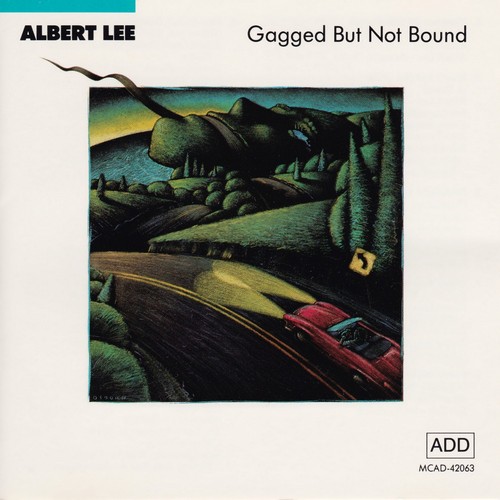
Today, I purchased the remaining CDs to complete my collection of the entire MCA Master Series catalog: 44 CDs released between 1986 and 1990, including one album with vocals and a rare special issue compilation included with BMW vehicles from that era. 

I thought I was done at 42 CDs. I knew about the country/vocal album put out at the very end of the MCA Master Series label’s life and I wanted to purposely disregard it because it has no interest to me.  I never had any hope of finding the BMW CD, since it was made so long ago in probably an incredibly small quantity and who would keep something like a promo CD with a new car?  However, as fate would have it, the completion of my collection came in a fortunate wave.  The two expensive holdouts became available for less than I’d seen before, a search for the rare BMW CD returned a hit, and the vocals album was available for a penny.  In a flurry of purchases, I was done, and done more than I even expected.  That is the completion of Phase 1 of my music plan. 

The status of Phase 2 – the scanning of all CD covers – is pretty sad.  I have a LOT of CDs and little free time and even less time where I am motivated to work on them, especially when a batch of scans came out poorly and I have to rescan them.  So I think I will reprioritize the scanning to focus on only the MCA Master Series covers so I can move on to Phase 3.

Phase 3 is the printing and framing of the CD artwork.  I don’t exactly have a plan for this just yet.  More on this to come…

You Change, You Lose

Today, I noticed a restaurant I used to visit closed up.  it got me thinking about all the places that I stopped going to because they changed in some way for the worse.  I keep telling myself that the one thing I wish I could express to the younger generation is that they have no idea what they missed out on, when fast food used to taste great.  But anyway, these are my reflections:

Burger King:  They used to have the best fries up until about 1996.  They were so good, I’d get a large and another medium with my meal.  Then this big craze of “coated” fries happened and everyone’s fries started sucking.  Later, in the “Great Recession” of 2007, they decimated the double cheeseburger.  That used to be single greatest value on the whole menu, then they turned the patties into tiny silver dollars.  Now, if I ever go there, I have to get two double cheeseburgers and the smallest fries available.  That’s maybe twice a year.

Wendy’s:  My first experience with Wendy’s was a long time ago, maybe early-to-mid-80’s.  It was amazing.  I had to wait for a long time for one to open near me, but when it did, I ate there all the time.  Then I moved away and I’m not sure if it was an operational coincidence or a geographical difference, but they stopped pressing their burgers.  This made the patty a thick cube and significantly altered the taste.  I tried to work through it, but ended up going less and less frequently.  Their fries have also declined in taste, so it’s now a very infrequent visit.  I feel bad because my nearest store just did a complete new and modern rebuild and I don’t even go there.  The parking lot is empty every time I drive by, too.

Longhorn:  I discovered their burgers maybe around 2003 on a vacation and ate them religiously until only a couple years ago when they changed their buns to some Brioch crap.  I ate them much less frequently, then just gave up and started eating the 6oz steak instead.  Longhorn’s fries have declined in taste lately, too.  I used to eat there multiple times a week, and now it’s maybe every other week.

Chilis:  I used to eat there a lot starting around 2005, then they changed their chili recipe from a Texas Red to something heavy on the beans (i.e. cheaper).  I didn’t eat chili, but my SO at the time did, so we never went back.  Fast forward a few years, new SO and new weekly+ enjoyment of Chilis burgers.  Until recently when they changed their buns to some Potato bun crap.  Seriously, it is like eating latex foam.

Green Iguana:  I discovered this place maybe in 2012.  It was somewhat close to work and they had great burgers and fries.  Then one day, they were closed.  Turns out they were moving to a new location.  After patiently waiting, I hit them up soon after they opened.  But it wasn’t the same.  They changed their fries and changed from Coke to Pepsi, and overall wasn’t just as good.  I went there twice, then stopped.  They just closed down; maybe they lasted a year at their new location.  There are other locations that I could and would be willing to try if I was near them.

Welcome To The Executives

If you are a company executive, sometimes, life is really good.  Obviously there is such a broad range of what constitutes being an executive, but when I’m using the term, I’m using it as a company person who is living and leeching off the company.  Someone who is more concerned about what they are getting out of any deal than anything else.  Someone who negotiates their employment to their sole advantage, because if the company can’t afford them, they’ll just move on to the next one.  You get the idea.

So, if you are one of these persons, you want to make sure you are being taken care of and you want to be sure you are extracting the most from any business trip.  I recently booked a couple-night stay at what I would consider an expensive resort.  But if you’re an executive, that’s not a concern.  It’s a business expense, so you want to make sure you are getting the best for the company’s money. 

Naturally, you are a member of the hotel’s rewards program, so you can get extra personal benefits from the company’s money.  Now here’s where it gets a little perverse.

This particular resort has add-ons that you can make to your stay, like included breakfast, or bike rentals.  But they also have some other interesting add-ons.  You can purchase, for a per-night cost, extra rewards points.  Now, why would a normal person willingly pay more (and we’re not talking a little more, try $144/night) for the same stay, just to get reward points, which are literally a fraction of a normal dollar for redemption.  $144 per night for three nights gets you 5000 extra points.

It’s crazy.  But… what if it’s not your money you’re spending?  Hmmmm. What if it’s just another business expense listed under Travel-Lodging?  How nice would life get then?  And what if you’re an executive – pretty much anyone who has seniority over the expense person in Accounting.  Who is he or she going to complain to?  Your boss?  Your boss would pat you on the back for such an awesome idea!

My Level Of Security

I’ll admit, I get around on the web.  I go places that you shouldn’t go.  But for the activity that I do, I’m pretty safe.  There’s only a few precautions I take and I don’t think it’s all that difficult for anyone else to do.

First and foremost, I installed the MVP Hosts file.  This file does a system-level blocking of any network application that tries to access an internet address that is considered advertising or malware.  This makes nearly everything better, because websites don’t get bogged down with ads.  There are some times that I do need to disable it, but those times are few and far between.  Because it’s system-level, that means IE, Chrome, Firefox, or any other application is immediately protected.

If you go looking for it, there is a growing argument that ads should not be blocked on websites, especially legitimate content sites.  I disagree.  I recently read an article on the analysis of the spread of an unpatched vulnerability.  The malware authors used a legitimate ad service that was utilized by many legitimate websites.  This means that there is no ad service that can be fully trusted.  My position is, if you want to display ads, you host them on your domain and you will take full responsibility for their content.  And because the ads are on the same domain as the content, I can’t and won’t block them.  Even if the ads aren’t malicious, legitimate ad services still serve up misleading ads, designed to trick you into clicking them.  They make them look like authentic messages or toolbars or status bars.  That’s not advertising, that’s flat-out deception.

Back to my security.  Next, I block Flash, Java, and all other plugins by default on all websites.  I used to do this in IE by changing the Flash plugin from blacklist to whitelist, but have come to prefer the ActiveX Filtering feature.

And I’m sure certain people would be screaming “You’re using the most insecure web browser evar!”  I would respond with a hearty rolling of the eyes.  Of the three precautions I take, this is the only one I perform at the browser level and without ActiveX, the majority of exploits are defeated.  That leaves JavaScript exploits.  How are these exploits delivered?  Through ads.  Ads that are blocked by the MVP Hosts file.

So, what’s the last piece of defensive software I use?  Microsoft’s EMET utility, which blocks vulnerabilities at the code level.  This is a really low-level utility and is not exactly user friendly, so I pretty much just run it at the default level.  It’s hard to tell if EMET is working because it’s so low-level.  I’ve seen it do its job twice.  Once, when I was using a Java applet on Verizon’s pages to play my voicemail and another on a sketchy website where it looked like the website was trying to perform an SVG image exploit.  I admitted already, I go to bad places sometimes.

Because I take these precautions, I hadn’t thought about being attacked in quite a while.  On a whim, I ran MalwareBytes and it came back with zero results.  My database was over 2 months old, if I saw correctly.

The only thing that I am vulnerable to is downloading Trojans and installing them myself.  And that is simply a personal fault – no fault of my computer or software. I will comment that downloading software from websites has really become a minefield, with sites displaying many different “Download” buttons at once.  You have to study the page and find the correct context for each button to make sure you are choosing the right one.

In summary, I feel I’m doing pretty good with the tools that are made available: KeePass, VeraCrypt (the replacement for TrueCrypt), MVP Hosts, EMET, and IE’s ActiveX filtering.  I use two-factor authentication whenever it’s available.  It’s not something I did all at once.  I added each little piece as I went.  And in total, it doesn’t slow me down at all.