Wasting Money On A Silly Idea

Well, that was a quick failure.  My previous idea, which was to use older technology to gain access to some data that seemed out of reach, was ill-informed.  Before I even got all the pieces of my $16 project, I figured out how to accomplish what I needed with what I had already.

To start, I was under the impression that my hardware could not read subchannel information from audio CDs.  This is false.  I just need the right software.  And the software was what was causing all of my misconceptions.  I use Exact Audio Copy (EAC) for my CD ripping.  There is an old version, specifically v .95 prebeta 3, that had a feature that would EAC to do direct reading of the track data, which would include the subchannel information.  Because of some legal ramifications of doing so, this feature was removed from prebeta 4 and all future versions of EAC.

I had acquired a copy of prebeta 3 and initially was not able to get it to launch.  Then, I was able to get it to start up by running it in administrator mode.  But then, it wouldn’t recognize when a CD was inserted in my drive.  So, since prebeta 3, code has been improved for things that are essential to its operation on modern operating systems, but code has been taken away for the feature that I needed.  In short, EAC is not going to accomplish what I need under any hardware configuration.

There is another, more modern, ripping tool call CUERipper, which is part of the CUETools suite.  I tried this tool briefly, but did not like the way it handled the ripped files, for one reason or another.  Instead, I kept using EAC.  But now, upon another evaluation, CUERipper will read the actual track data in the same way that EAC refuses to do.  And it does read the subchannel data, which is what I really needed.  That means, CUERipper is the software that I need and all that old hardware is unneeded.  All to waste, I guess.

Still, CUERipper is an inelegant tool and it doesn’t do things the way I want.  However, it is open-source software, and it is actually programmed in .NET.  That means I have the ability to actually change the program to do exactly what I want, how I want it.  And so that is the future plan.  The next few days I won’t be able to do any work on this, but after that… I’ll be able to make my own custom ripping software.  How awesome. 

Some small part of me is actually considering re-ripping my entire collection again.  Why?  Well, over time I have replaced CDs here and there but may or may not have ripped the disc that is actually on the shelf.  So I can be sure that my digital collection is out of sync with my physical one.  That effort remains a wait-and-see.

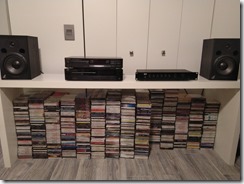
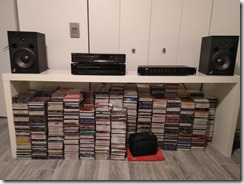
The Collection, 2019 In Review

I was browsing through some old blog posts and I found that in January last year, I had a year-by-year analysis of my CD collection, so I figured it would be a good time to see how 2019 added to the pile.  As a quick recap, I added to my collection each year:

2016: 207 new
2017: 254 new
2018: 327 new

And in 2019, I added 262 new items.  Not as aggressive as 2018, but I can understand why.  Last year, I sort of struggled finding stuff that I actually wanted to buy.  I was interested in filling gaps in my collection as opposed to growing it in new directions.  It’s the year I made peace with the idea that my collection is going to be incredibly focused on 1980’s releases.  Not that that’s overly limiting, because there’s a lot of sub-genres to explore and there’s a lot of music available in just that decade.

Also, I was focused a bit more on adding collectables, like target CDs and gold CDs from Mobile Fidelity Sound Labs.  Purchases like these are not your $1-2 thrift store buy (unless you’re lucky).  As my list of wanted target CDs shrinks, the availability of those CDs shrinks accordingly and the prices increase accordingly as well.  So, spending upwards of $25 for a target CD I want isn’t unheard of.  Gold CDs I have always held a price cap of $30, although I did pay $50 for one that I felt was a sure buy.

So at this point, I have 82 target CDs (excluding duplicates) and I have 18 gold CDs.  These numbers grew substantially in 2019 – I added 8 gold CDs alone.  I expect this segment to continue to grow in 2020, which will continue to add significant and durable value to the collection (spoken in my CFO earnings-call voice).  No one should ever collect anything as an investment, however, you can be intelligent with your purchases and buy quality when you can – a balance of quantity and quality will satisfy everyone.  When it comes time to divest the lot, separate the rare from the common and liquidate each group appropriately.

On the topic of breadth, I did discover more smooth-jazz artists to add to my stable.  It all fits together that early CD adopters were more affluent, the technology was more expensive, and their tastes were more refined (or snooty, if you think).  So there are a lot of jazz titles available in the early 80’s.  And because the 80’s were an era of early synths and drum machines – sounds that are now generally despised – you can find albums in this genre quite cheaply.

2020 is hopefully going to be another year of quality.  The quantity is already there.

Help Us Help Them

I’m fighting a pretty tough bout of cynicism right now.  I got an email from a hotel chain of which I am a rewards member.  The email subject was about supporting the Australian relief efforts.  The big type pleaded for me to donate my rewards points for the cause. 

I have a long-standing issue with companies that ask their customers to help in disasters by giving them money.  Primarily because I am very, very certain that the company will use all the money collected in the drive as their own donation, and then they will take the tax write-off for that donation.  Don’t you think?  They’re not a non-profit.  You don’t get a receipt for your donation to them.  You can’t claim it as a tax deduction yourself.  Are they going to let that go to waste?  Hell, no.  Plus, they are the ones that get to say, "We donated $550,000 to the relief effort!"  And not all of it was their money, for sure.

This email plea irked me in another way.  They are asking you to give back something they gave to you to give to someone else.  That statement says what I mean it to say, but it doesn’t seem to capture the full audacity of the premise.  On the surface, it sounds legit.  The company has a liability on their books with all those outstanding rewards.  That’s value.  You’re donating something that has value.  But really, it’s nothing.  It’s all fake, virtual value.  You paid them for those points.  You redeem those rewards for empty rooms.  The empty rooms are there for offer regardless of any points balance.  What I’m saying is the hotel can just as easily make those rooms available for disaster relief regardless of any points donations.  All the donation does is reduce their future liability to their customers.

And here’s the final nagging thought.  Yes, charity is good.  Corporate charity should be good as well.  If no email had come in today, I wouldn’t have had anything to bitch about, so the fact they’re doing anything is better than nothing – I acknowledge that.  Regardless, if an offer evokes cynicism, it just doesn’t have the level of altruism that makes you proud of a company.

So when the offer from the company says they "will match up to $25,000" of donations, that’s really saying they are willing to donate $0.  As long as no one donates anything, that’s all they’re on the hook for.  And it’s also saying that if their customers are super-generous, they’ll personally stop at $25k.

I feel bad for criticizing a relief drive effort, but this offer just has a bad vibe to it.  I think they should have done it right or not done it at all.

Spending Money On A Silly Idea

One of the more dangerous things in this world is a man with extra time and extra money.  A danger to himself and to the world at large.  If it’s not an actual, you know, danger, then it’s just stupidity – a different kind of danger.  Semantics aside, I have some extra time and some extra money and wanted to get an answer on something.  With the entire knowledge and experience of the Internet failing me, or at least failing to convince me, I set out to get my own answer.  Am I going to change the world with my soon-to-be-found knowledge?  Fuck, no.  It’s so trivial, it hardly even matters to anyone.

To even appreciate what I am seeking, you have to be pretty involved in my hobby of CD collecting.  If you’re not, then the rest of this post won’t even really interest you.  Further, you have to be fairly experienced with technology and computers, otherwise, this won’t really make much sense.  So, warnings provided, now for the explanation.

In the early days of CD manufacturing, some CDs were pressed with "pre-emphasis", which is a special equalization.  CD players as part of their manufacturing specification had to be able to detect pre-emphasis and apply a reverse equalization (de-emphasis) when playing back these early CDs.  Sounds pretty simple, right?  Over time (actually very quickly), pre-emphasis use was discontinued, so all CDs today don’t have pre-emphasis anymore.  That’s fine for the general public, but somewhat of a nuisance for early CD collectors like myself.

Now that you understand the situation, here is the problem in a nutshell: CD players – and especially computer CD-ROMs – do not have the capability to detect pre-emphasis anymore.  So if you play back an early CD, you do not get the corrective equalization applied to the music, which makes it sound thin and harsh.  This also applies to CDs that you rip on your computer.  There are software plug-ins that can apply de-emphasis to the files after they have been ripped, so the problem can be somewhat mitigated.  But aside from using your ears, because the CD-ROM cannot detect the pre-emphasis, you can’t know for sure if the CD you ripping has pre-emphasis.  Again, not a problem for anyone but early CD collectors.

And so what I am looking to know is:  I want to be able to detect pre-emphasis on CDs in my computer.  Thus, my project.

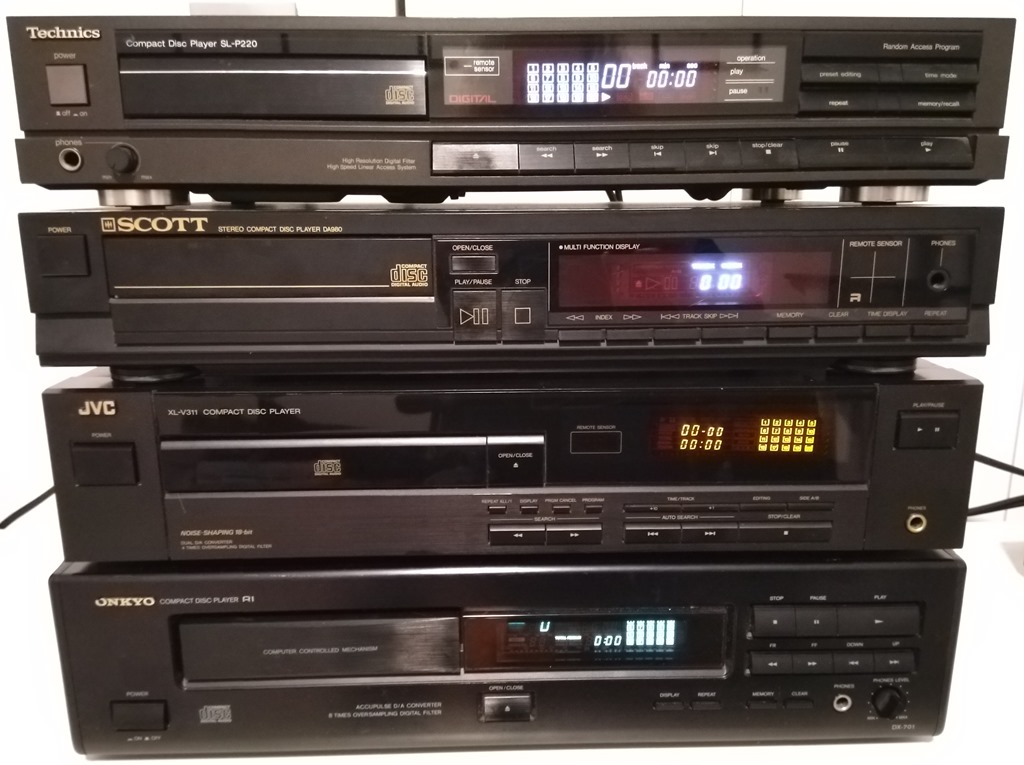
I’ve discussed the CD history, now for the computer history.  Early computer CD-ROM were literally mini-cd-players.  They had a headphone jack and a volume control and some even had a play button in addition to the eject button.  Additionally, on the back of the drive, there was a jack to run the audio from the CD drive to the computer’s sound card.  These old drives played audio CDs in analog.  They had build in DACs (digital-to-analog converters), but you can be pretty certain they were not of the quality found in home stereo CD players.  Still, because they were doing the digital conversion, they also had to support handling pre-emphasis.

As technology moved on, pre-emphasis was no longer a concern and also, Windows began reading the audio from CDs digitally.  So drive makers dropped the headphone jack, dropped the DACs and dropped analog output completely.  It made the devices cheaper and audio could be read at the drive’s full speed instead of the 1X speed of analog.  Technologically, a great step forward.  But in the process of simplifying the device, they removed the capability to read pre-emphasis at all – it wasn’t needed.

But now, I want to get an old CD-ROM that has a DAC and analog output so I can hopefully detect pre-emphasis when ripping a CD.  The problem is that all those old drives use the IDE interface, which is long, long obsolete.  Computers now use the SATA interface.  But that’s only a stumbling block because of course someone has made an IDE-SATA interface converter.  So, technically, everything is still possible.  I don’t have to go to the extreme of building an old Pentium computer from parts salvaged from the 90s, thank god.

Naturally, EBay is the order of the day.  Because this project is only for curiosity, I’m buying stuff as cheap as possible.  For $16, I have a 19-yr old CD-ROM and an interface kit coming by next week.  Then it will be a challenge to see if I can get my computer to see the new (old) drive, then it will be a challenge to see if the ripping software will talk to the new (old) drive, and if it does, will the drive report the pre-emphasis information to the software.

So, there’s still some unknowns.  For the $16 I’ve spent, I’ve purchased a lottery ticket for either frustration or a jackpot of, "oh, neat."  What will I do with this incredible information?  Well, obviously, I’ll share it whenever I can.  It will be a good data point for my posts on Relative Waves and I’m sure some other collectors would like to know which CDs have pre-emphasis.

News You Make Fake

In my phone’s news feed, there are some headlines that I know are pure clickbait and more times than I’m willing to admit to, I’ve clicked them.  The grand offender of this scam is a website, Alternative Nation, which seems to specialize in rock music gossip, a total tabloid trash website.

To get an idea of how bad they really are, I went directly to their site and did some browsing.  Because they appear to be a blogging platform, I simply appended /feed to their domain and I was able to get an RSS feed of their latest articles, which I loaded into Outlook for some cleaner review.

Here’s an example of how this bullshit works.  Eddie Van Halen has been rumored to be in poor health for a very long time.  So what the editors at AN do is create a headline that suggests EVH’s health has taken a turn for the worse.  An example would be: Eddie Van Halen Family Leaks Terrible ‘Skinny’ Photo. (The subject of the post is not EVH, but his wife.  The photo is not of EVH or his wife, but of a random skinny person who is representative of her weight loss goals.  Not a leak, not terrible.)

Another broader method they use is to exploit the perceived depravity of rock bands.  Motley Crue, Aerosmith, KISS are all prime targets here.  The trick is to take something completely simple or innocent and twist the words so your brain thinks it’s something dirty or horrible.  It’s your fault and when you figure it out after reading the article, you might be mad at AN for tricking you like that, but again, you know you’re to blame for reading too much into the headline.  Some examples:

  • KISS Singer Paul Stanley Leaks Creepy ‘Feet’ Photo – It’s a picture of him wearing KISS branded Puma shoes.  No leak, no feet, no creepy.
  • Steven Tyler Girlfriend Reveals ‘Worst’ Drug Used – A brief mention about listening to music while on acid.  "Worst" does not get used in the article.
  • John Lennon Sad ‘Licking’ Claim Finally Revealed – "Lick" as in "guitar lick", no tongues.  Sad, indeed!

The headlines have some go-to words: "sad", "disturbing", "terrible", "stuns", "caught".  But those words are probably part and parcel of any tabloid editor’s toolkit.  It wouldn’t surprise me at all if there was a utility that could re-write an article replacing all normal-strength adjectives with hyped-up, over-the-top versions.  The only difference between these articles and printed tabloid stories is the lack of exclamation marks.

But you know, it’s all for the clicks.  These "editors" subscribe to celebrities’ social media, then attempt to build an article on a single statement.  A single statement isn’t much to work with, but with some clever wordsmithing, at least the article will generate a page view and some ad views.  That’s all that matters anymore.

More Words, Now With More Security

I got my lock!  If you don’t see it, you need to go to https://anachostic.700cb.net.

image

Thanks to the regular march forward of technology, I can now get a free SSL certificate for my websites.  The process isn’t exactly simple, and it’s not convenient, but the results are effective.

The process is more geared towards Linux servers, but with a few additional steps you can create a certificate for Windows servers.  I’m sure I’ll figure out a way to simplify/automate the process and make it easier over time.  The lack of convenience is that the certificate expires every three months instead of every two years.  That’s a fairly significant investment of effort to keep this going.

But, I am a believer in security and privacy, so you can now rest easy knowing that the pages you’re requesting here are not being snooped on by anyone else.

Road Trip In ATL

Over the weekend, I made a road trip up north to Atlanta to see some friends and explore some shops for CDs.  Before I left, I did some research on places I wanted to visit.  As is my default, I used Bing.  A lot of people dismiss Bing as useless, but it’s probably for the same reason that I dismiss Google – I just don’t use it.

Bing Maps has a neat feature where you can save places into an itinerary, and it will create driving directions automatically from the list.  This is what I came up with for Saturday’s run.

image

The downside to using Bing Maps is that it’s not part of Android Auto, which is how I do the navigation in my car.  In the interest of being fair about the routing capabilities of Google vs. Bing, I took a look at Google maps to see if I could have done the same thing there.  What I found was that you can make a custom list of places, but you can’t automagically turn that into a multi-waypoint drive.  I suppose you could keep the list open and work your way through the items, choosing each in turn as the next destination.  So, it’s just a different way of accomplishing the same goal.  I’m not going to say "Google sucks, Bing rules" because that’s just stupid and we should all be more adult about this.

On one of the stops at CD Warehouse – a chain store that has been bankrupt for almost two decades; I have no idea how these ones are open – I found a CD to purchase.  It was a Japan pressing of an Eagles compilation.  I identified it as purchase-worthy because of the smooth case that had "Patent Pending" embossed on it.  These are some of the first CDs manufactured, when the jewel case was still a new invention.

I took the CD to the counter, paid and left the store.  After leaving, I snuck a peek at the CD and realized it was a common US pressing.  I was disappointed but unsurprised.  CDs can certainly migrate between cases, especially in a store that probably has a dozen of each title at any time.  I chalked it up as a buyer-beware failure on my part and moved on.  Later in the evening, I was looking at my whole day’s spoils and realized that the Eagles album was not in a smooth case.  I had been given a totally different CD instead of what I chose from the rack.

So I began debating if it was worth the effort to go back and demand the item I had chosen.  Would it still be there?  Would the staff just roll their eyes and say, "fuck off"?  Would I get the replacement and have it be no better than what I already had?  Was it worth the drive anyway?

I decided it would be worth the effort, and planned to go before driving back home on Monday.  My friends convinced me it would be better to try on Sunday because of workday traffic and were willing to sacrifice some of our day together to accomplish this.  So, with the store’s closing time quickly approaching, we set out for the store with the replacement.  We made it in the last 15 minutes.

I went to the rack and quickly found the same smooth case I had originally picked – they had simply put it back after I left.  I went to the counter and plead my case.  I had been rehearsing how to explain that I wanted this specific CD and not just any CD and had planned to try and be technical without being condescending.  At the most extreme, I would have to show them my Relative Waves website that explained the difference in CD masterings.  In reality, I was pretty awkward about the whole explanation, saying that I got a different CD, but it was the same, but it wasn’t the same.  Good job, Dave.  Way to explain it.

The guy at the counter said, no problem.  He went to the computer and scanned the old CD and my purchased CD, then retrieved the actual disc that was supposed to be in the case.  As he placed the CD in the case on the counter, he said, "there you go, Japanese pressing."  And at that point, I knew that he understood.  I didn’t need to say anything more than thank you.  And I left with my early pressing album.

Also on the list were some antique malls.  In my area, people seem to treat antique malls as consignment shops and as such, you can find people selling their personal CD collections (which technically could be antiques).  However, in this area, antique malls are filled with actual antiques.  Not of any benefit for CD hunting, but still a fun and interesting experience.  I did find some tiny décor items for the house, so it wasn’t all bad.

And finally, the thrift stores.  This is actually my second round of thrifting in Atlanta.  The first time was a long series of disappointments and this one was generally a shorter version of the first.  It just makes me more grateful that the thrifts in my area have some decent selection of CDs.  Maybe there are more collectors in Atlanta keeping the thrifts bare, who knows.

But the trip was not supposed to be about me and my hobbies anyway.  It was about the company and the experience.  In that respect, it was top-notch.  There’s plenty to be grateful for in spite of any success or lack of success in my hobbies.

Leaving Flickr

Now that my blogs are on my own server, I’m going to have to content myself with much lower traffic.  That’s not really too much of a concern of mine.  But at the same time, there are some things that I do want to share, and I would hope they get some exposure.

I’m not a self-promoter.  I prefer to be discovered naturally, without any artificial boosts or bumps.  I guess it would help with credibility, like "oh, he’s only famous because he spammed Reddit every day for a year with links to dumb posts."  That’s like the opposite of what I want.  But really, I don’t want fame.  I just want to be helpful.

And on that topic, I have a few albums on Flickr that I consider helpful.  Some, based on views, might actually be helpful.  And I fear, when I move them here to this network, they won’t be discovered as easily or at all.  But, looking at it from another perspective, I am moving them here in case Flickr goes away completely, so there’s that threat as well.

Anyway, in the coming days, there’s going to be a new menu item for articles.  These are things that don’t really have the same meaning as blog posts, to be chronologically placed.  Maybe they’re like "sticky posts".  But these pages will have the content that was previously hosted on Flickr.  Specifically, some repair articles for keyboards I’ve owned.  The article format will be much better suited for the purpose than a photo album.

I’m going to have to figure out exactly how I will manage my CD Artwork collection as a series of pages.  I’ve looked for other places to host them and for one reason or another, it’s just never worked out.  And you know what they say, if you don’t like it, you’re free to do it yourself.  And I guess that’s the whole point of bringing my blog network in-house.

The Past, Present, And Future

As I stated in a previous post, I am moving my blogs to my own server in 2020, and that day has come.  I managed to get everything set up and migrated all of the old posts in time.  So this is my last post here on WordPress.com.  I’ve had some followers over my nine years here and I won’t be offended if you don’t migrate with me.  I recognize the convenience and the nice community features a large site like WordPress has, and my little singular server isn’t going to have any of those niceties.  And to put a little extra emphasis on that, I set up my server to be essentially a closed system – no users, no comments.  So again, if you don’t visit, I won’t be hurt.  In fact, I won’t even really know.

Thanks for spending time with my words.  We all must be going to our new home now.  You can find more words in the future at https://anachostic.700cb.net.

Random Roads

I got to take a ride today.  It had been a little while since I had been out.  Last week I got the bike out and it made it to the driveway for about an hour and had to be put back for bad weather.

So this morning, I got the bike out and started riding before I really had a chance to second-guess myself.  I didn’t really have any destination in mind.  I had a quick thought about a road I always saw cars turning onto and I wondered why everyone wanted to take that road.  Where did it go?

So I went and found out what all the fuss was about.  It turned out to be a parallel road that goes to a neighboring town.  That’s good to know.  It’s good to have options when traffic or whatever happens.

Once in the neighboring town, I thought about what I would eat.  I had another memory that there was a pizza place across the road from the Boston Market that I had always ate at.  Whenever I would eat there, I would stare at this pizza place and wonder what it was like.  So, why not?  The pizza turned out to be pretty good and they had a good salad.  Not awesome, but nothing to stay away from.  While I was there, I could tell it was obviously a “family-run” business.  They had the kids in the back prepping food.  And as only young siblings would do, they were fighting.  Normal employees don’t tell each other to stop doing something and when asked why, state “because you suck at it!”

8dadeb8e34b96ab2100ef6f3a4e51283

On the way back, I came across yet another road that I’d wondered where it went to.  It went parallel on the other side of the main route.  So I went out and back on either side of the main router between the cities.  Interesting.

As is evident in the picture, the clouds were pretty prevalent throughout the whole trip, so I got the bike back home and put it away.  When I was out, i didn’t see many bikes; maybe six.  Later that afternoon on the way to dinner, I saw just as many or more, but they were all battling the downpour we were all in.  And I was in my car.